
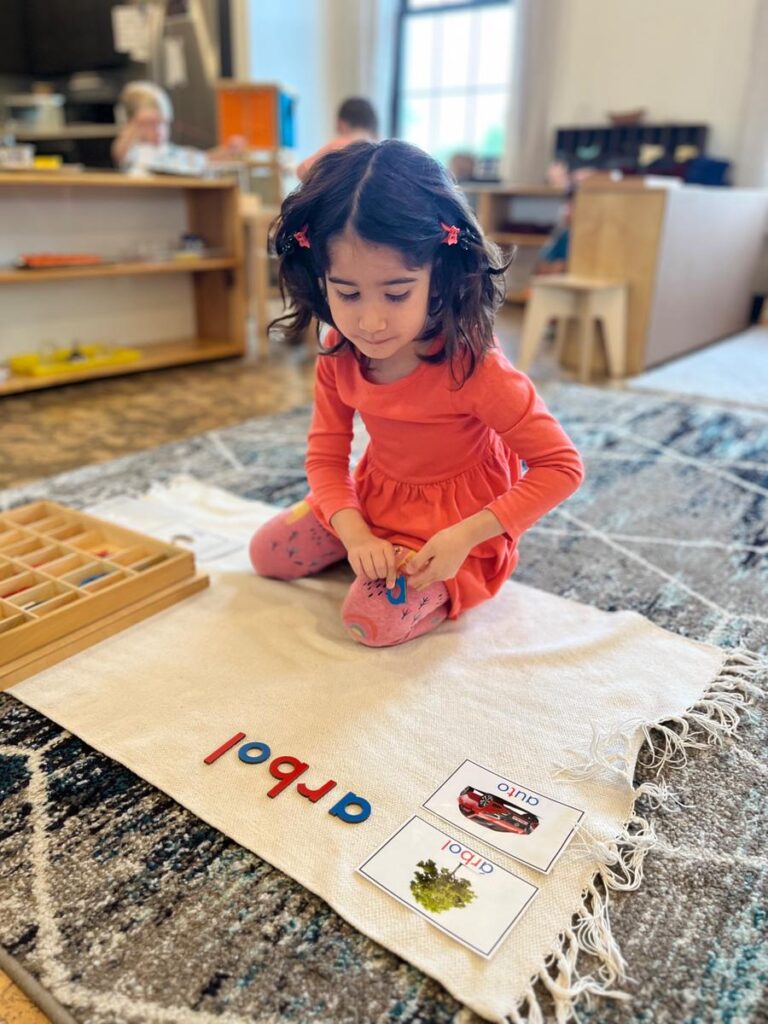
“Never help a child with a task at which he feels he can succeed.” — Maria Montessori
You may already know that Montessori educators deeply value and encourage independence in children from the very beginning. Why is this character trait so central to our approach? At Maravilla Montessori, we believe that nurturing independence is not just about building life skills, it is about honoring the child’s natural human drive toward competence, dignity, and self-reliance.
The True Impact of Independence
When we give a child the time and trust to do things for themselves, we send a powerful, unspoken message: “We believe in you, and you are capable.”
This trust transforms how children navigate the world. They grow up feeling emotionally secure, grounded in their abilities, and confident in making sound choices. When adults refrain from stepping in prematurely, children develop self-trust, resilience, and a deep sense of responsibility as contributing members of their community.
This journey evolves through distinct developmental planes:
- Birth to Age 6: The child’s primary internal motivation is physical independence (“Help me do it by myself”).
- Elementary Years (Ages 6–12): The focus shifts toward intellectual and moral independence (“Help me think for myself”).
- Adolescence: Youth seek social and financial independence as they navigate the transition into adulthood.
What Independence Looks Like at Maravilla Montessori
- Practical Life & Physical Autonomy: In our early childhood classrooms, children build motor precision and concentration by caring for their environment: preparing real snacks, dressing themselves, and tending to classroom plants or animals.
- Freedom Within Limits: Our prepared environments allow children to choose their own work within structured boundaries. Every option in the room is purposeful and safe, giving the child genuine agency over their learning trajectory.
- Self-Directed Learning & Research: As students move into the elementary years, they use work plans, time-management tools, and independent research projects to meet academic expectations while exploring their own intellectual passions.
Supporting Independence at Home
Cultivating independence at home requires a subtle shift in perspective. Children are almost always capable of doing more than we assume. With clear modeling, child-sized tools, and a little patience, they eagerly accept real responsibility—they naturally want to contribute to the family rhythm.
Here are a few practical ways to embed this value into your daily home routine:
- Build in Buffer Time: Send your child to put on their shoes 10 minutes before you need to leave so they can practice without feeling rushed.
- Prepare the Environment: Place child-friendly cleaning supplies, drinking glasses, and healthy snacks on accessible low shelves.
- Reframe Spills as Opportunities: Treat accidental messes not as mistakes, but as practical life exercises in cleaning up independently.
- Offer Controlled Choices: Allow your child to select their own clothes within weather-appropriate boundaries.
Supporting independence is not a static milestone; it is an evolving, lifelong journey. As Maria Montessori reminded us, it requires our constant awareness, patience, and willingness to step back so the child can step forward.