
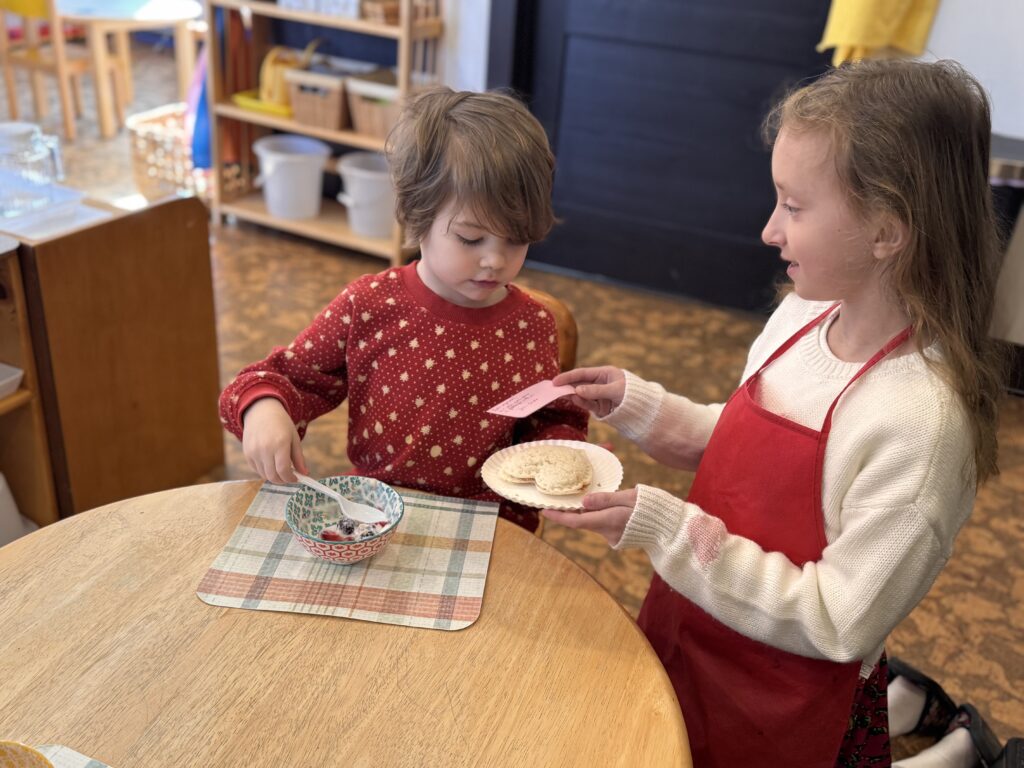
Sometimes it can feel like our society has abandoned previous social norms. In many ways, this is a positive evolution, especially when old norms were non-inclusive or restrictive. However, many foundational social expectations play a critical role in nurturing a society where human beings treat each other with genuine kindness, respect, and dignity.
Somewhere along the way, regular discourse lost its manners.
This brings us to a critical pillar of Montessori education: Grace and Courtesy. At Maravilla Montessori, grace and courtesy are not treated as afterthought rules or superficial etiquette. They are explicitly taught, modeled, and woven into our daily curriculum. Our teachers receive specialized training to cultivate an environment where mutual respect, emotional safety, and executive function develop hand in hand.
We certainly do not mean to say we live in a world full of rudeness (though it can feel that way at times!); there is plenty of good, and many people still deeply care about grace, courtesy, and empathy. What we are acknowledging is that our broader society hasn’t always emphasized these habits as intentionally as it should. In the rush of daily life, essential elements of our shared humanity are sometimes forgotten.
So, what can we do together as a community?
We can start by showing you where we focus our efforts in the classroom. When parents recreate these intentional habits at home, the effects ripple outward into our entire community. In the short term, we model peaceful interactions for those around us; in the long term, we partner to raise self-regulated, compassionate children who will step out into the world and do the same.
How Grace & Courtesy Unfolds Across Stages of Development
- Infants & Toddlers (Modeling & Presence): For our youngest children, grace and courtesy are absorbed entirely through observation and adult modeling. When life gets hurried, we slow down and offer full presence. Is your infant gazing at you? Gaze back. When they babble, echo their sounds or speak softly to them. When a toddler struggles with big emotions, sit with them, hold space, and provide the precise vocabulary for what they are feeling. Remember: children do not only learn from direct interactions; they constantly observe how we speak to our partners, how we greet our neighbors, and how we interact with the barista at the local coffee shop. They are watching, absorbing, and building their internal map of human connection.
- Preschool & Primary (Practical Life & Social Mastery): As children grow, we offer explicit opportunities to practice grace and courtesy within their environment. We show them explicitly how to greet guests, how to wait patiently, how to resolve peer conflicts peacefully, and how to offer help. Grace and courtesy also extend to self-care and environmental stewardship. From learning to brush their hair and wipe crumbs after a meal to restoring their work materials and contributing to classroom chores, young children develop profound self-reliance, fine motor control, and internal discipline.
- Elementary Years (Justice, Empathy & Service): During early elementary, children enter a phase driven by abstract thought, moral development, and a strong internal desire for fairness and justice. They are naturally primed to explore empathy, kindness, peace, and generosity. When discussing world issues or local community needs, we can speak with age-appropriate frankness. Elementary children want to understand—and more importantly, they want to contribute.
Service Work in Action
Service projects allow elementary students to transform empathy into practical action. Examples of community service projects include:
- Organizing book sales to raise funds for local food security programs.
- Visiting local senior care facilities to share songs and conversation during the holidays.
- Participating in neighborhood and campus park cleanups.
- Gathering provisions and volunteering at local food pantries.
The key to meaningful service is complete child involvement: students help identify the cause, construct the plan of action, and execute the service themselves.
Supporting Grace & Courtesy at Home: A Quick Guide for Parents
- Honor Infants & Toddlers as Full Human Beings: Involve them in daily family routines. Offer your undivided attention when they speak or communicate. Even before full language develops, treating young children with profound dignity lays the bedrock for how they will treat others throughout life.
- Scaffold Practical Independence for Preschoolers: Create home structures that allow young children to meet their own hygiene needs, select appropriate clothing, and listen to their body’s cues. Children are capable of far more than adults often realize when given time, space, and accessible tools.
- Involve Children in Home Care: Teach basic home chores and invite their help with household upkeep. Children naturally delight in purposeful work that directly contributes to their family community.
- Guide Outward Compassion: Focus early years on basic manners and peaceful conflict resolution. As children mature and look toward the broader community, support their desire to contribute and solve real problems. Children innately want to do good; our role is to guide them toward becoming proactive, compassionate community members.
Thank you for taking the time to read, for being an active partner in our school community, and for allowing us to walk alongside you on this parenting journey. Together with our children, we are building a more peaceful, empathetic, and respectful world.