
“The mind takes some time to develop interest, to be set in motion, to get warmed up into a subject, to attain a state of profitable work. If at this time there is interruption, not only is a period of profitable work lost, but the interruption produces an unpleasant sensation which is identical to fatigue.”
— Dr. Maria Montessori, What You Should Know About Your Child
Consider, as an adult, what it takes for you to do your best work. What must your environment look like? What do you need from others? What constraints do you need removed in order to meet your goals?
Dr. Montessori spent years observing children as they engaged with their environment. She quickly recognized that immense, natural learning takes place during deep engagement, making it reasonable to call it the child’s true work. Left without unnecessary adult interruptions, she witnessed pure developmental magic.
Children—even very young children—possess an extraordinary capacity for intense concentration. They have an innate ability to work through problems, refine motor skills, and discover solutions all on their own. They want to do these things. And what is even more inspiring? They do it with a sense of internal self-satisfaction and pride, not because they feel external pressure, reward, or expectation.
What Montessori realized is that we, as adults, often need to get out of the child’s way. We frequently assume children require more assistance than they actually do, or that we must offer artificial rewards or incentives to ensure they complete their learning. Those assumptions misread human nature. What children truly need is time, respect, and a carefully prepared environment in which they may focus deeply on their chosen work.
Thus, the uninterrupted work period was born. Generally spanning three full hours in the morning, this sacred block of time is a cornerstone of authentic Montessori education.
How Does the Work Period Begin?
The start of the morning work cycle is calm and purposeful. Typically, it begins as children arrive at school. For some classrooms, on certain days or seasons of the year, there may be a brief whole-community gathering, but the overarching rhythm remains focused on individual choice and flow.
A typical morning at Maravilla Montessori begins with the child hanging their belongings on a designated hook, changing into indoor shoes, and sharing a warm, personal greeting with their guide. They may say hello to a peer, take a quiet moment to transition, and then select a work from the accessible shelves. Others arrive so eagerly that they move directly to a material they have been thinking about since the previous afternoon.
In early childhood (ages 3–6), the child will primarily work independently or in parallel alongside peers. They unroll a work rug, set up their material, and enter a state of deep, undisturbed focus. They use the materials as they have been presented, complete the exercise, and independently restore the work to the shelf for the next friend.
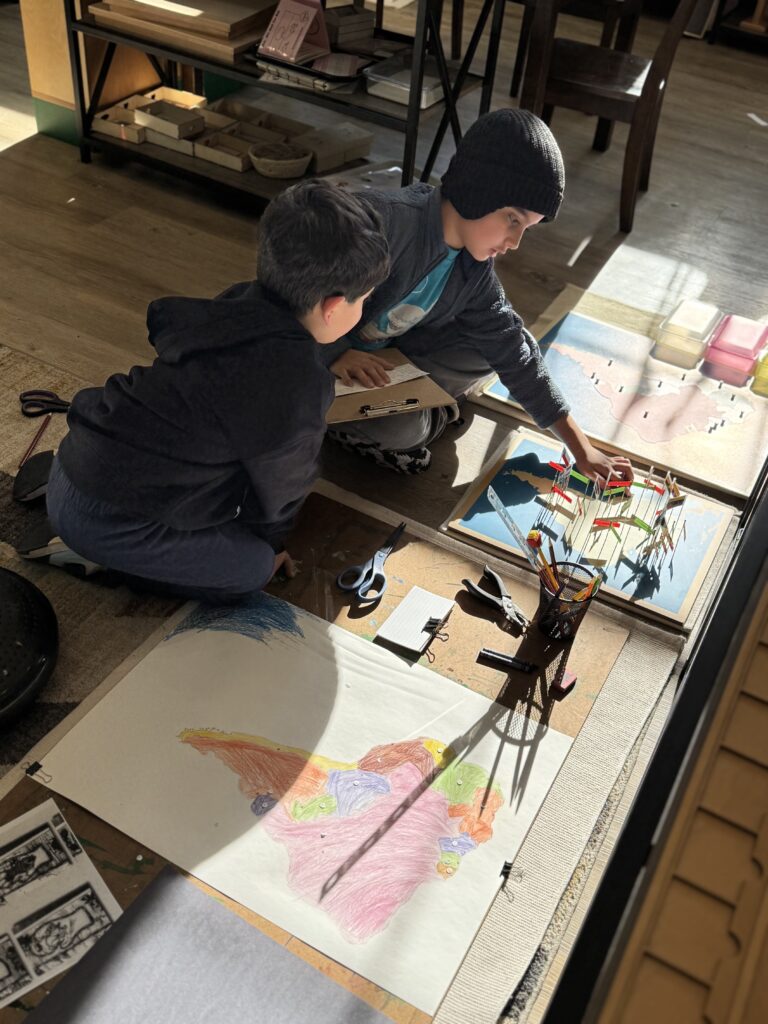
As children enter elementary (ages 6–12), their natural developmental drive shifts toward social collaboration. The morning work period becomes more dynamic, often taking the form of collaborative research, group problem-solving, or shared projects.
What Do the Adults Do?
A Montessori classroom relies on a prepared team of adults: the lead guide and the assistant guide. The assistant ensures the environment remains immaculate, orderly, and fully stocked so every material is accessible. When a child requires gentle redirection or physical assistance, the assistant steps in unobtrusively, preserving the child’s maximum level of independence.
This structure frees the lead guide to focus on two essential responsibilities: observation and individual or small-group presentations. Whole-class lectures do not exist during this time. Instead, lessons are offered quietly to one or two children at a time based on observation of their readiness.
Adults in a Montessori classroom protect the child’s concentration at all costs. If a guide needs to connect with a student who is deeply engaged, non-verbal structures are used—such as placing a personalized name marker near their rug—alerting the child to check in with the guide only after they have completed their current task.
Do Children Really Focus for Three Hours Straight?
Not continuously—and we do not expect them to! Very few adults can focus for three straight hours without a mental pause.
Our prepared environments are designed so children can independently recognize and meet their own physical needs. If a child feels hungry, they prepare and eat a snack at the designated snack table when they choose. If they need to use the restroom, they go independently without asking for adult permission. If they simply need to stretch their legs, look out at our campus gardens, or observe a bird outside, they are free to do so. Respecting these natural pauses allows for far deeper sustained focus overall.
There is a fascinating developmental phenomenon that occurs during this block. Around mid-morning (often between 10:00 and 10:30 AM), classroom communities frequently experience what Dr. Montessori termed false fatigue.
Like clockwork, ambient noise may rise, movement increases, and children appear to wander. While a traditional impulse might be to ring a bell or demand attention, Montessori educators hold back. False fatigue is a natural resting point of the collective brain. When adults observe quietly and wait just two to three minutes, the children naturally settle back into an even deeper, more profound state of work than before.
What Does a Work Period Look Like for an Individual Child?
Throughout the morning cycle, a child completes one work, restores it, and selects another. This flow is woven together with self-chosen breaks, a presentation with their guide, a healthy snack, social interactions with peers, or a quiet moment observing nature.
The uninterrupted work period is an intentional way to honor the child’s natural rhythm, balancing intellectual challenge with personal care on their own internal timetable. It communicates a profound truth to the child: we trust you. And our students rise to that trust every day.
Curious to see the peaceful focus of a morning work period in action? We invite you to visit Maravilla Montessori. Schedule a tour today!